step one plan

In order to become a practicing physician, in addition to attending medical school, we also have to take national licensing exams (USMLEs or ‘boards’). The first of these exams is known colloquially as ‘step one’ and is supposed to be the most difficult of them all. At most U.S. medical schools, students take the exam after they finish their first two years of med school. Most schools have a 6-8 week period after classes end in the second year that are designated specifically for studying for the exam. Some students take it earlier in the period and use the rest of time for vacation and others take it right before third year begins so they have more time to study.

As I’ve discussed in previous posts, it takes me a reaaaaally long time to understand and memorize material so I have to be really careful about my study schedules and make sure I review throughout each block in addition to learning new material. So when it comes to studying for step one, I know that I need to start early. Below I’ve included the resources I’ll be using over the next few months during second year and before the designated step one studying period starts. This, of course, is just what I think will work best for me. Many students wait until January to even think about the boards or don’t even study until the designated studying period starts. But I think it’s important to recognize your strengths and weaknesses and create a plan that’ll work best for you.

Read More »

refugee crisis

Alan Kurdi, one of thousands of innocent lives lost in this crisis. His family has requested that this photo be used instead of the drowning one. This little boy sparked a fire under us when we became complacent about the atrocities in Syria and the current refugee crisis. Let’s not let the fire go out without doing anything to help the victims.

“You have to understand, that no one puts their children in a boat unless the water is safer than the land.” 
 Home, Warsan Shire

Enough is enough. Seriously, how is any of this real? I don’t understand how such atrocities can exist in this world for years on end and somehow the world keeps on spinning. I wish it didn’t. I wish it would just stop for a second so we could all be jerked awake to the many, many injustices that exist in this world. So that babies wouldn’t have to wash up on the shore for us to realize what’s going on. So fathers wouldn’t have to sell ballpoint pens on streets to make money to feed his family.

Read More »

a day in the life: MS2

I’ve been wanting to do this post for a few weeks now and I thought today would be a good day to do it since there are a good variety of things I can talk about (and the whole post won’t be about me sitting at my desk in my PJs studying all day). I’ve seen quite a few bloggers do similar posts and I think it’s a really neat way to get to know the more ‘behind the scenes’ of the day.

  • 9:00 AM – We didn’t have lecture until later this morning so I got to sleep in, which was really nice. Originally, I wanted to go on a quick run before class but didn’t sleep very well and woke up exhausted so just ended up going back to sleep. The weather has been really nice here in the mornings so I made a cup of coffee and had breakfast on the balcony.
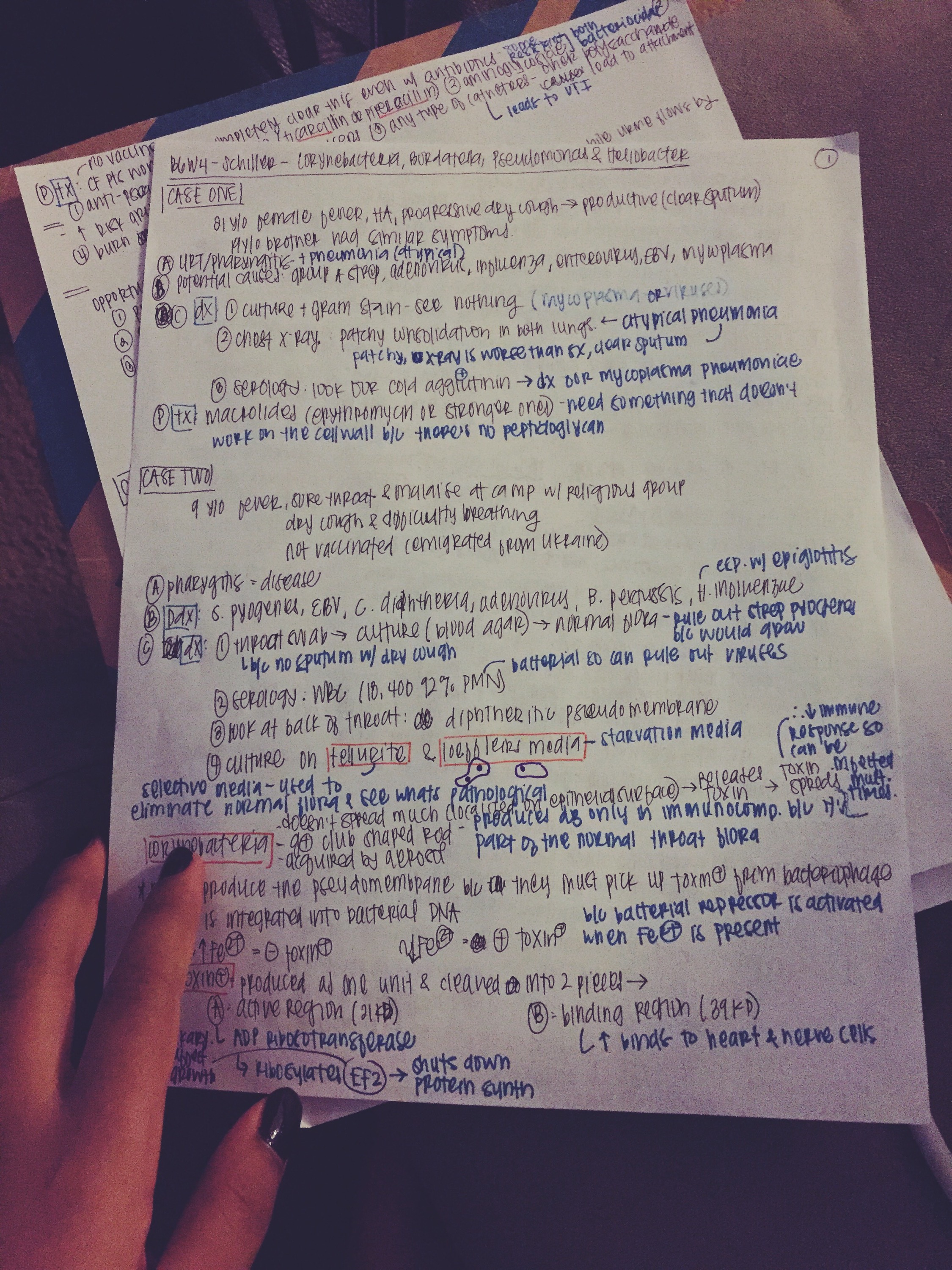
  • 10:00 AM – 12:15 PM – We had another microbiology lecture this morning on a bunch of bacterias (corynebacteria, bordatella, pseudomonas and heliobacter for those of you who are curious). One of our professors likes to do a ‘flipped classroom’ style with his lectures and I personally really love it. It forces me to prepare ahead of time and also makes much more sense because he provides reasoning for why everything works the way it does. Microbiology is so memorization heavy, which is pretty much what I’m the worst at, so any reasoning/logic to why things work the way they do is so helpful. He also teaches using cases instead of just presenting the facts about the pathogens, which helps put it all in a clinical context. 
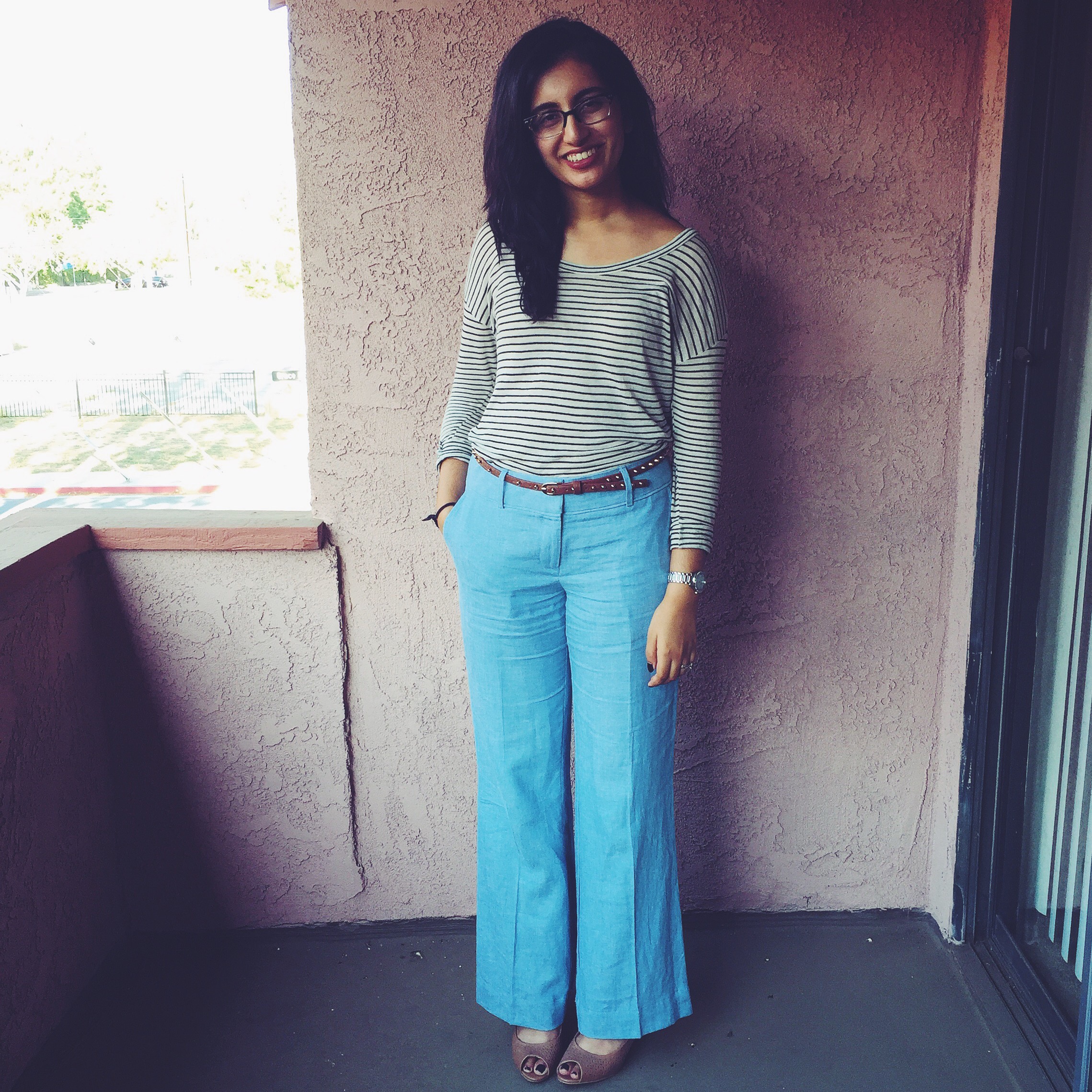
  • 12:30 PM – 1:00 PM – After lecture, I rushed home to shower and change into formal clothes for pediatric rounds. I finally got to style these slacks I got from LOFT over summer. 
  • 1:00 PM – 1:40 PM – Before heading to rounds, I had lunch with my dad and hubby at one of my favorite restaurant downtown and had the most delicious open face veggie sandwich. The food there is so fresh and they serve the best fresh fruits as a side.
  • 1:40 PM – 2:00 PM – Rushed to the hospital to meet the pediatrician for rounds. There was a bit of traffic but fortunately didn’t take that long. It was only my second time at this hospital so I didn’t really know my way around but luckily it didn’t take too long to figure out where I was going.
  • 2:00 PM – 4:20 PM – I saw pediatric patients with one of my classmates shadowing a pediatrician in our community. It was my first time every working with goobers in a medical setting and it was really interesting to see the differences between caring for adults and children. We also saw a variety of ages and it was interesting to see how providing care varied from a 3 week old, to a 2 year old, to a 6 year old and a 15 year old. Also picked up some cool tricks from the pediatrician on how to get younger patients to cooperate with physical exam. Tiny humans also tend to attract various pathogens because their immune systems are still developing so we got a lot of exposure to the material we’ve been learning in microbio this block. I’m not sure if pediatrics is something I’d ever pursue as a career but it was definitely a really fun afternoon.
  • 4:20 PM – 5:00 PM – There was a bit of traffic on the drive home so it took about twice as long to get back home as it did to get to the hospital. I usually get really annoyed in traffic but I’d been having such a great day, it didn’t really get to me.
  • 5:00 PM – 6:45 PM – Hung out with hubby and watched a couple episodes of Dexter/The West Wing on Netflix and worked on the beginnings of this post/edited photos to add in here. I’ve recently been watching The West Wing as my ‘study break’ show and I like it way more than House of Cards. HOC was waaaaaay to dark for me. I feel like TWW keeps it real but also is somewhat uplifting at times. And the last thing I need when I’m tired of studying is to lose even more faith in the world.
  • 6:45 PM – 7:15 PM – Went on a walk with hubby. We try to do this every evening that we’re home and it isn’t scorching outside. Today was a really nice day and I reached my goal of 5k steps! I know that’s not really much but when you spend most of your day just sitting around and studying, it can be difficult.
  • 7:15 PM – 9:00 PM – I had put some meat in the fridge to thaw earlier in the day so that I could make dinner but we ended up having leftovers from lunch with my dad so we just reheated that. I made a iced mango black tea in bulk yesterday so I’ve been sipping that throughout the evening.
  • 9:00 PM – 11:00 PM – I’ll be reviewing the bacterium that we learned about in lecture today and going over the mini-paper I’ll be presenting in PBL (problem based learning) on Friday morning. Also going to try to a quick run through of the lecture we’re having tomorrow morning before PBL so that it’s not completely foreign in class.
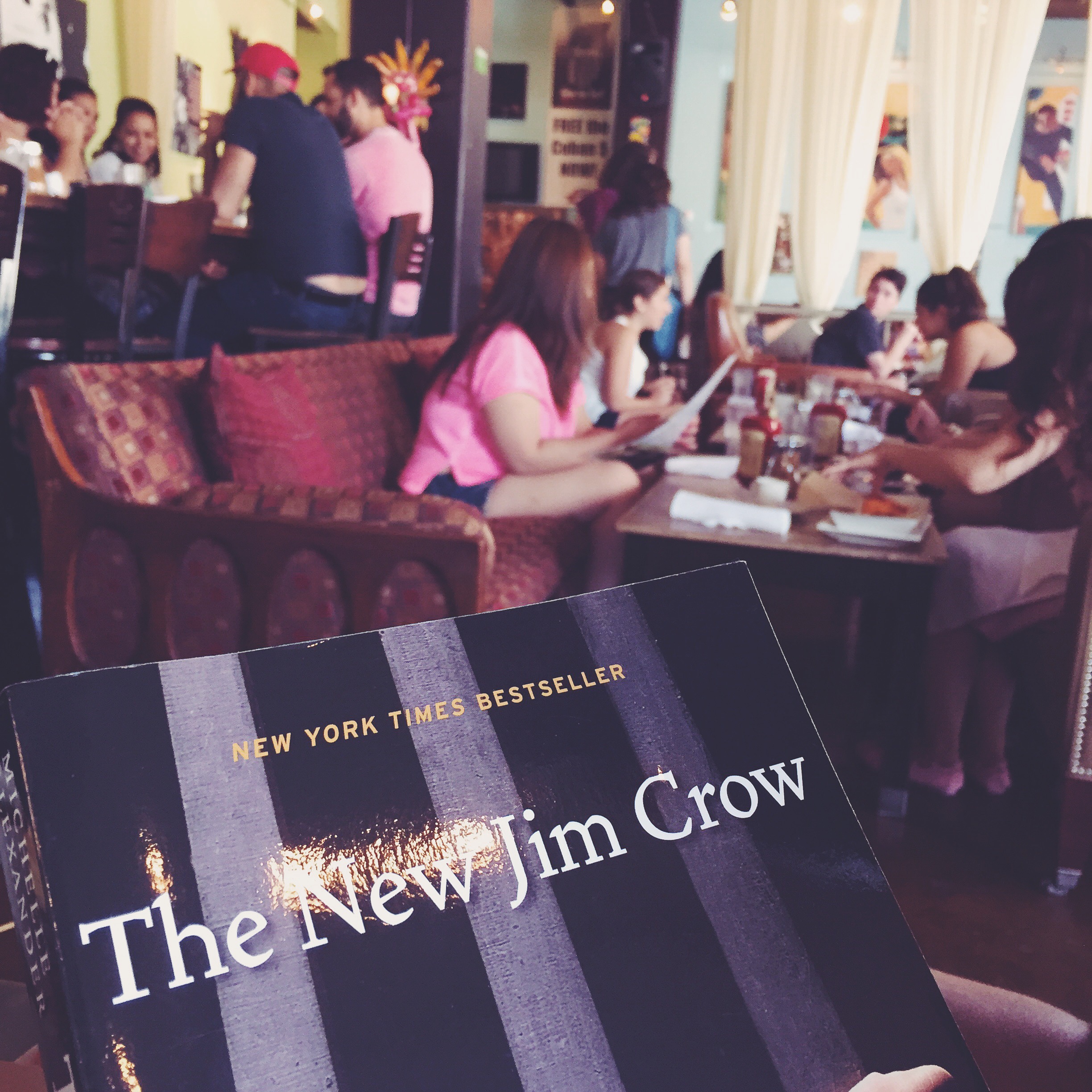
  • 11:00 PM – 11:30 PM – Continue reading The New Jim Crow by Michelle Alexander. I’m about halfway through the book right now and really want to finish it during this block. I try to read at least one book per block. So far this text has been really educational and eyeopening. I’ll probably do a book review/summary once I’m finished.
  • 11:30 PM –  And then it’s lights out! I try to sleep before midnight when I can so that I can actually process what’s going on in lecture and all that the following day.

Hope that helped give some insight into what a typical day usually looks like! There’s usually a couple more hours of studying involved but second year has been a lot nicer in terms of the numbers of hours we’re actually at school/doing required activities. So on the days that run to about 4-5 PM, I consider them more self care days. We have the long weekend coming up and I’ll be reviewing all the material we’ve covered in the block thus far and will probably try to take a day completely off to spend with family and friends. Hope you all have a great weekend!

focusing on strengths

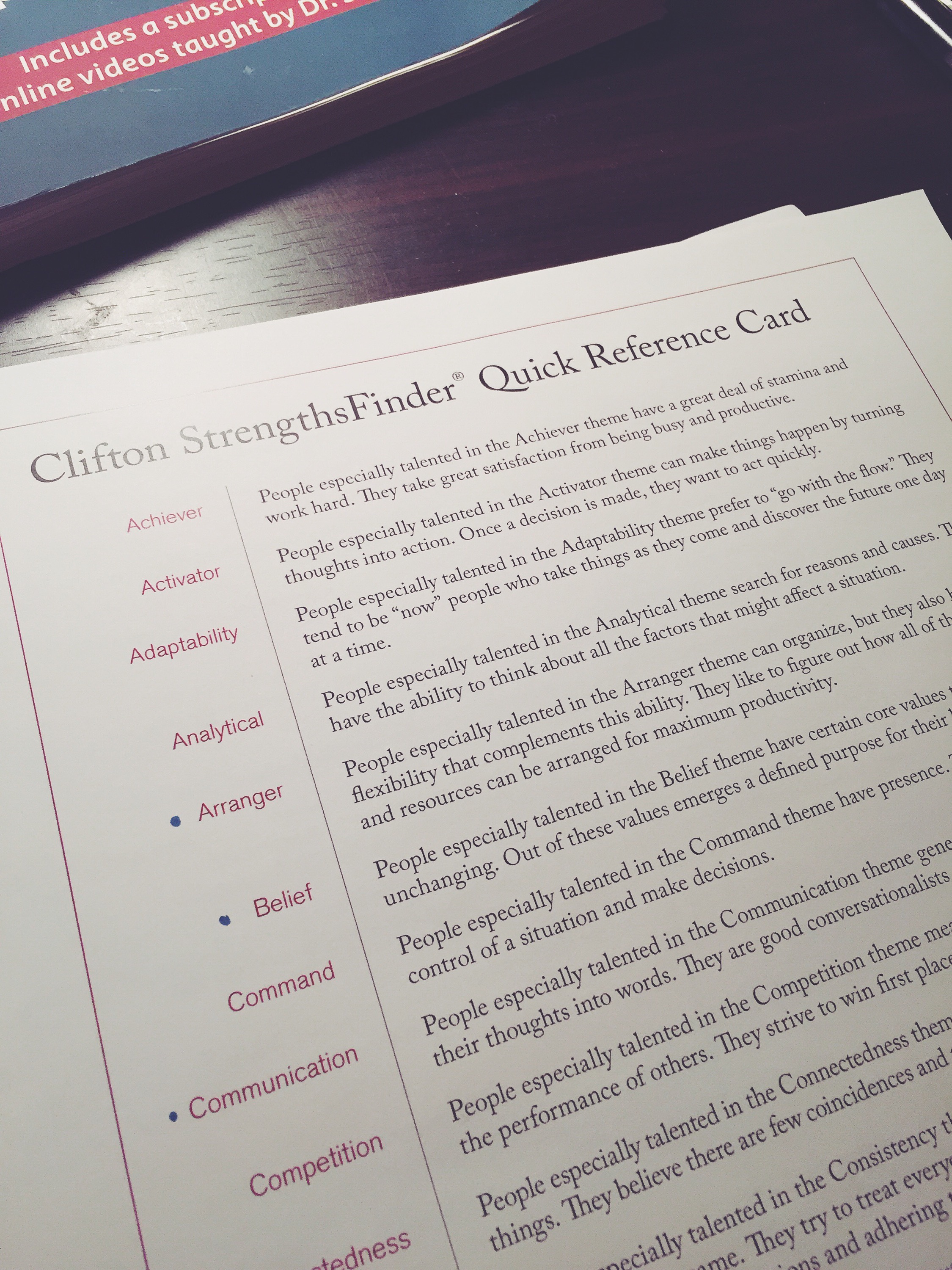
Earlier this week we had one of the best lectures I’ve ever attended in my life. Dr. Keith E. Hall spoke to us about how identifying and focusing on our strengths (rather than our weaknesses) can help us with improving our lives both in general and as medical students. He started the lecture with the following quote:

“What would happen if we studied what is right with people?”
– Donald O. Clifton, Ph.D. 

And just five minutes before this lecture began we had been learning about various strains of streptococcus. He was asking this question to a group of students who have dedicated their lives to studying pathology and learning how to ‘fix’ it. But when I read this question, it really got me thinking. What would happen if instead of complaining about patients being non-compliant, I tried to understand their strengths and created a plan accordingly? What would happen if I suggested lifestyle modifications in a way that resonated with the specific patient I was talking to? What would happen if I stopped comparing myself to my classmates?

Read More »

doctors make the worst patients


So as I stated in my previous posts, I’ve been really stressed about starting second year. The summer before I started medical school, between the wedding and moving three times, was so hectic that I never really had the time to stress too much about the future. I kind of just showed up to orientation and somehow a year passed without me even noticing. After remediating successfully, I was of course so grateful for the opportunity to move onto second year with my cohort but I’ve been really nervous too. Part of me still feels really unsure about whether I belong here or if I ever learned enough during first year to actually competently be able to take care of patients in the future. I know that self doubt can be really poisonous and I need to get all this negative energy out of me so I’m trying to put my best foot forward and move on.

Read More »

the ‘real’ stuff

Tomorrow I start MSII and it would be an understatement to say that I’m not ready. I wish I could just skip over this year, especially boards. So not looking forward to that but it’s a part of the process. It’s hard but I need to keep perspective about why I’m here and putting in all this work.

I wanted to post a few shots from my DSLR (aka my ‘real’ camera) before I get too busy with school and procrastinate. Hope you all have a great week!

  Read More »

marriage and med school 

About a year ago, I started my first year of both marriage and medical school. In the midst of graduating college, wedding planning, getting married, moving three times and starting medical school, I definitely had my hands full but I still made the time (of course) to be worried about whether all these simultaneous changes would ultimately be disastrous. Now, in my second year of both medical school and marriage I’m so happy to have started both of these journeys together. It, of course, was not an easy transition but I’m so happy to have had someone to share this journey with. I’ve been asked time and time again about balancing marriage and a career and after thinking about it for a few weeks and asking hubby’s advice, I’ve come up with the following tips:

Read More »

book review: Body of Work

I wish I remember how I stumbled upon this incredible text, but I honestly don’t. Nonetheless, I don’t think it would be an exaggeration to say that in many ways Dr. Christine Montross’ Body of Work: Meditations on Mortality from the Human Anatomy Lab got me through the first year of medical school.

I’ve been very open about how anatomy lab was and still is one of the most transformative and difficult experiences of my life, both as a subject of study and emotionally. When I first began studying anatomy, I did recognize the great privilege it was to study the human body from this perspective. I was almost unspeakably grateful to those who donated their bodies so that my colleagues and I could become better healers. But when we first started dissections in October of last year, I did not understand how integral this experience was for me as a physician in training. I did not understand why I was learning about how to ‘save lives’ by studying the dead. I felt traumatized. Every time I stepped into anatomy lab, I simultaneously felt grateful, sad and anxious. Everything felt so unnatural. I knew rationally that the cadavers felt no pain during our dissections but that did not prevent me from wincing at the sound of each rib cracking or a saw cutting through bone.

Read More »

faith and medicine, not a contradiction


I’ve been pretty open about my faith on this blog and while I don’t owe anyone any sort of explanation, I do realize that science and faith aren’t often seen on the same side of the equation. And while I respect peoples’ right to believe whatever they choose to believe, I thought I’d take a shot at explaining why my faith is so important to me and how it got to be that way.

“The wound is the place the Light enters you.” – Rumi

As many stories of ‘finding yourself’ begin, mine also starts at when I was lost and in a state of extreme despair. I grew up in a practicing Muslim family. My parents moved to the U.S. from Pakistan, where the official religion of the country is Islam. The vast majority of the people my parents grew up with were all Muslim. They never questioned Islam as a way of life because it’s all they ever knew. It was ingrained into every fiber of their being.

Read More »

anatomy lab reflections part two: hands

This piece is the second in my series about my experience in anatomy lab during my first year of medical school. The first piece in this series can be found here.

I wrote both these pieces as a means to reflect on and normalize what I was feeling on the first day of anatomy lab and during a dissection I found to be particularly difficult, emotionally. Now that I’m finished with my first year of medical school, I look back and I’m even more grateful to have had this experience. Death, ironically, will always be a part of life but being in this field we have to work even harder to healthily cope with this reality. While the point of anatomy lab was to teach us about the human body in a tangible way, all the cadavers were the ultimate teachers about both life and death. From them, I learned what a heart, my heart one day and likely the hearts of future patients, looks like when it’s no longer beating. From them, I felt the weight of a cirrhotic liver. From them, I saw what a ‘smoker’s lung’ actually looks like. But from them, I also learned the muscles I use to type this sentence. They are the reason I can feign x-ray vision and imagine my muscles, tendons and bones working together as I hit each key. They are the reason I marvel at all my nieces and nephews as they grow and learn to walk and speak and think. They are the template for every patient I will see in my career as a physician.

It’s been just over a month since we finished anatomy lab and said goodbye to our cadavers. Thank you, great teachers, for your final sacrifice. I hope that you have finally found rest and ‘burst into light.’

Read More »